Morocco Travel FAQ — Answered by Locals
Thirty honest answers from our Marrakech-based team — visas, safety, money, what to pack, camels, desert camps and everything in between. Can't find yours? WhatsApp us; a real person replies within 24 hours.
Booking, prices & payments
How our private tours are priced, booked and paid.
How much does a Morocco tour cost?
Our private tours start from $420 per person for the 4 day Sahara tour, $890 for 7 days, up to $1,890 for the complete 14 day grand itinerary — real starting prices are published on every tour page, based on 4 travellers sharing premium riads in low season. Your exact quote depends on group size, season, accommodation level and activities, and arrives on WhatsApp within 24 hours.
How do I book a tour — and how much is the deposit?
Message us on WhatsApp or fill the quote form on any tour page. We reply within 24 hours with a full custom itinerary and price. Once you're happy, a 30% deposit secures your dates and the balance is paid on arrival in Morocco, in cash or by card.
What payment methods do you accept?
Deposits by bank transfer or card. The balance on arrival in cash (euros, dollars or dirhams) or by card. You always receive written confirmation of exactly what's included before paying anything.
Can I change my travel dates after booking?
Life happens — tell us as early as you can and we move your deposit to new dates whenever possible. Private tours have no fixed departures, so date changes are usually easy outside peak holiday weeks.
Can I customise any tour?
Yes — every itinerary on our site can be lengthened, shortened, combined or completely redesigned: different start city, more beach days, fewer driving hours, special occasions. Custom trips are most of what we do. Tell us your dates and wishes and we design it free.
Do I need to tip in Morocco?
Tipping is appreciated but always optional. Rough guidelines: 10–20 dirhams for café staff and porters, 1–2% at restaurants if service isn't included, and for multi-day tours many guests give their driver-guide the equivalent of $5–10 per day at the end if they're happy. Never feel obliged.
Visas, safety, seasons & packing
Everything to sort out before you fly.
Do I need a visa for Morocco?
Travellers from the US, UK, EU, Canada, Australia and many other countries enter Morocco visa-free for up to 90 days with a passport valid at least 6 months. Rules change, so confirm with your nearest Moroccan consulate before flying — we'll also remind you of entry requirements when you book.
Is Morocco a safe country for travellers?
Morocco is one of the safest destinations in Africa and the Arab world, with a huge tourism economy and visible police presence in tourist areas. Petty hustle in the medinas is the main annoyance — and on a private tour your driver-guide is with you, which removes most of it. Solo women travel with us regularly; we choose riads and routes with that in mind.
When is the best time to visit Morocco?
March–May and September–November are ideal — warm days, mild nights, comfortable in the cities, mountains, Sahara and coast. Winter is quiet and beautiful with cold desert nights; summer suits the coast and early-morning sightseeing. Every itinerary is adjusted to its season.
What should I pack for a Morocco tour?
Light breathable layers, comfortable walking shoes, a warm layer for desert and mountain evenings, sunscreen, sunglasses and a scarf or hat. In winter add a proper jacket for the Sahara night. A small day-bag helps on excursions — your main luggage stays in the vehicle. We send a full packing list with your confirmed itinerary.
What's the dress code in Morocco?
There's no legal dress code for visitors, and cities like Marrakech are used to every style. That said, modest dress — covered shoulders and knees — is appreciated in medinas, villages and religious sites, and simply gets you warmer welcomes. Bring a light scarf; it solves most situations.
Do I need vaccinations or special medicines?
No special vaccinations are required to enter Morocco from most countries. Bring your personal medications, basic stomach remedies and sun protection. Pharmacies are excellent and everywhere in cities. For personal medical advice, check with your doctor or a travel clinic before the trip.
Should I get travel insurance?
Yes — we strongly recommend travel insurance covering medical care and cancellation for any international trip, and it's not included in our tours. Any provider covering Morocco works.
Will I be able to access the internet?
Easily. Every riad and hotel we use has Wi-Fi, and 4G/5G coverage is good along the whole tourist circuit — including, surprisingly often, near the dunes. For data on the road, buy a cheap local SIM (Maroc Telecom, inwi, Orange) at the airport, or use an eSIM. Your driver-guide can help set it up.
What electrical plugs does Morocco use?
European two-round-pin plugs (types C and E) at 220V. Travellers from the UK, US and Canada need a simple adapter — bring one, though most riads can lend you one too.
Can I drink the tap water?
Stick to bottled or filtered water — it's cheap and available everywhere. Tap water in cities is treated, but a different mineral profile can still upset a traveller's stomach. Hot drinks, cooked food and peeled fruit are no problem.
What languages are spoken in Morocco?
Moroccan Arabic (Darija) and Amazigh (Berber) are the everyday languages, French is widely spoken, and English is common across the tourism industry. Our driver-guides speak English and Arabic (French too), so you're never stuck.
Vehicles, guides, camels & camps
What the trip is actually like, day to day.
What vehicle will we travel in?
A modern, air-conditioned private 4WD, minivan or minibus depending on your group size — with only your party on board. Child seats and boosters are available on request at no extra cost.
Who will be our guide?
A professional bilingual driver-guide accompanies you for the whole tour — driving, guiding on the road, handling logistics and restaurants. In Fes and Marrakech, licensed local city guides join for the deep medina visits. Everyone we work with, we know personally.
How do I prepare for the camel trek?
No experience needed — the camels walk slowly in a guided caravan for about an hour each way. Wear long trousers, bring a scarf for the wind and your camera for the sunset. If you'd rather skip the camel, a 4×4 can take you to the camp instead — just tell us.
What is the desert camp like?
Better than you expect. Our standard camps have proper beds, thick blankets and shared bathrooms; the comfort and luxury camps have en-suite private bathrooms, hot showers and real furniture. Dinner, drums around the fire and a sky full of stars are included at every level. In winter we add heaters.
Can you handle dietary needs — vegetarian, halal, kosher, allergies?
Yes. Moroccan cuisine is naturally friendly to vegetarians, all meat is halal by default, and we brief every kitchen about allergies ahead of your arrival. For kosher-style and fully kosher arrangements see our Jewish heritage tour; for guaranteed alcohol-free venues see our halal tour. Just tell us your needs in the quote form.
Is Morocco good for kids?
Wonderful for kids — Moroccan culture adores children, and camels, dunes, kasbahs and souks are a giant playground. We run a dedicated 7 day family tour with maximum 4 hours driving per day, pools every night and car seats on request — and any other tour can be adapted for children.
Can travellers with limited mobility join a tour?
In most cases, yes. Medinas are uneven and some sites have stairs, but a private tour means we control the pace, pick ground-floor rooms, park close and swap walking for scenic driving where needed. Tell us honestly what works for you and we design around it — we regularly host guests in their 70s and 80s.
What happens if I visit during Ramadan?
Morocco stays open to visitors during Ramadan — tourist restaurants serve food all day, and the evenings are magical when the streets fill after iftar. The rhythm is a little slower in the afternoons. Muslim travellers: see our halal tour for a full Ramadan-adapted itinerary with suhoor, iftar and taraweeh arranged.
Is alcohol available in Morocco?
Yes, in licensed restaurants, bars and many hotels — but not in medina cafés or most local restaurants, and it's polite not to drink in public spaces. If an alcohol-free environment matters to you, our halal tour guarantees it; if a glass of wine with dinner matters, tell us and we book accordingly.
Cash, cards, souks & moments
The practical (and the magical) side of Morocco.
What currency is used — and can I use credit cards?
The Moroccan dirham (MAD). Cards are accepted in riads, hotels and bigger restaurants; souks, cafés and desert villages run on cash. ATMs are everywhere in cities — withdraw dirhams on arrival and keep small notes for tips and taxis. Euros and dollars are also easy to exchange.
How does bargaining work in the souks?
It's a friendly sport, not a fight. Counter somewhere below half the first price, smile, drink the mint tea if offered, and walk away if the number doesn't fit — half the time you'll be called back. Fixed-price shops exist too. Your driver-guide will tell you what things actually cost.
What would be a truly memorable Moroccan experience?
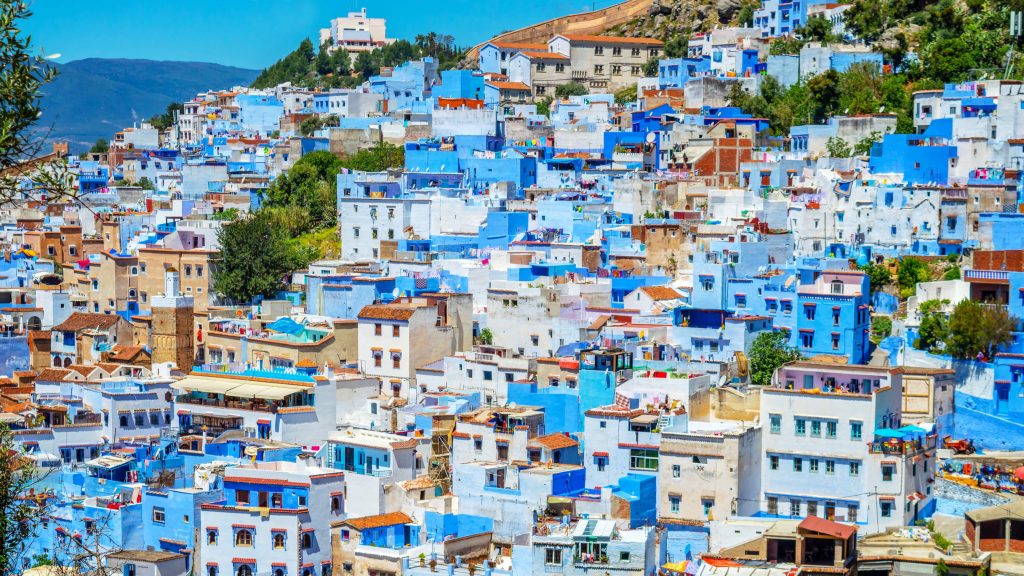
Ask a hundred guests and most name the same moment: sunset from the Sahara dunes, then the silence and the stars after the drums stop. Close behind: dawn in the Fes medina before it wakes, mint tea on a Chefchaouen rooftop, and the first view of Aït Ben Haddou across the river. Our tours are built around those moments.
Why book with Imperial Excursion instead of a big platform?
Because you deal directly with the Marrakech-based team that actually runs your trip — no call centres, no middlemen margins, no reselling. Every tour is 100% private, prices are published transparently, and the person answering your WhatsApp is the person responsible for your journey.
Still have a question?
A real person from our Marrakech team answers every message — within 24 hours, usually much faster.